
Gulf Coast storms bring down limbs and whole trees every year. What you do in the first hours can protect your family, your property and your insurance claim.
Right after the storm
- Keep everyone clear. Stay away from fallen trees, hanging limbs and uplifted root plates. Damaged trees can shift without warning.
- Treat every wire as live. If a tree is touching or near power lines, call 911 and your utility. Don’t approach it.
- Don’t cut it yourself. Storm-damaged wood is often under tension or compression and can spring back violently when cut.
- Document everything. Take wide and close-up photos of the tree and any damage before anything is moved.
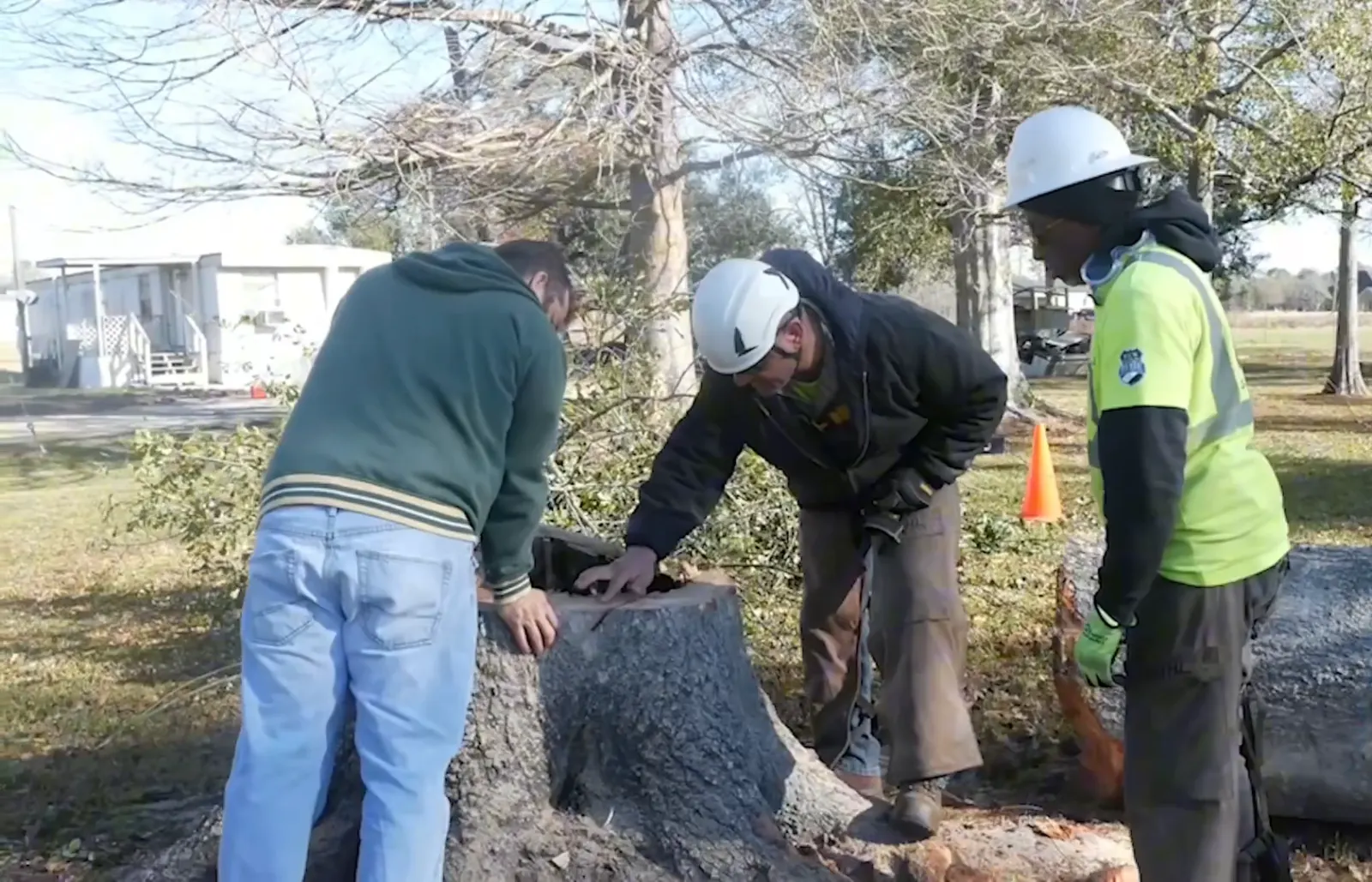
- Call a professional tree service. An experienced crew can make the hazard safe, remove the tree under control and document the work for your insurance company.
After the emergency is handled
Trees that are still standing may have hidden damage: cracked unions, loosened roots or broken limbs high in the canopy. An arborist assessment can tell you which trees are safe to keep, which need pruning or support, and which should come down.
Before the next hurricane season
- Have mature trees near your home inspected before the season starts.
- Remove deadwood and reduce overextended limbs over roofs and drives.
- Ask whether cabling or bracing makes sense for trees with weak unions.
- Avoid topping, which creates weakly attached regrowth that fails more easily in wind.
- Protect root zones from compaction and construction damage. Healthy roots anchor trees.
If a tree is down on your home, car or road right now, call 985-688-4041. We answer 24/7.