






24/7 storm & emergency response

Veteran Owned & Operated · Houma, Louisiana 985-688-4041
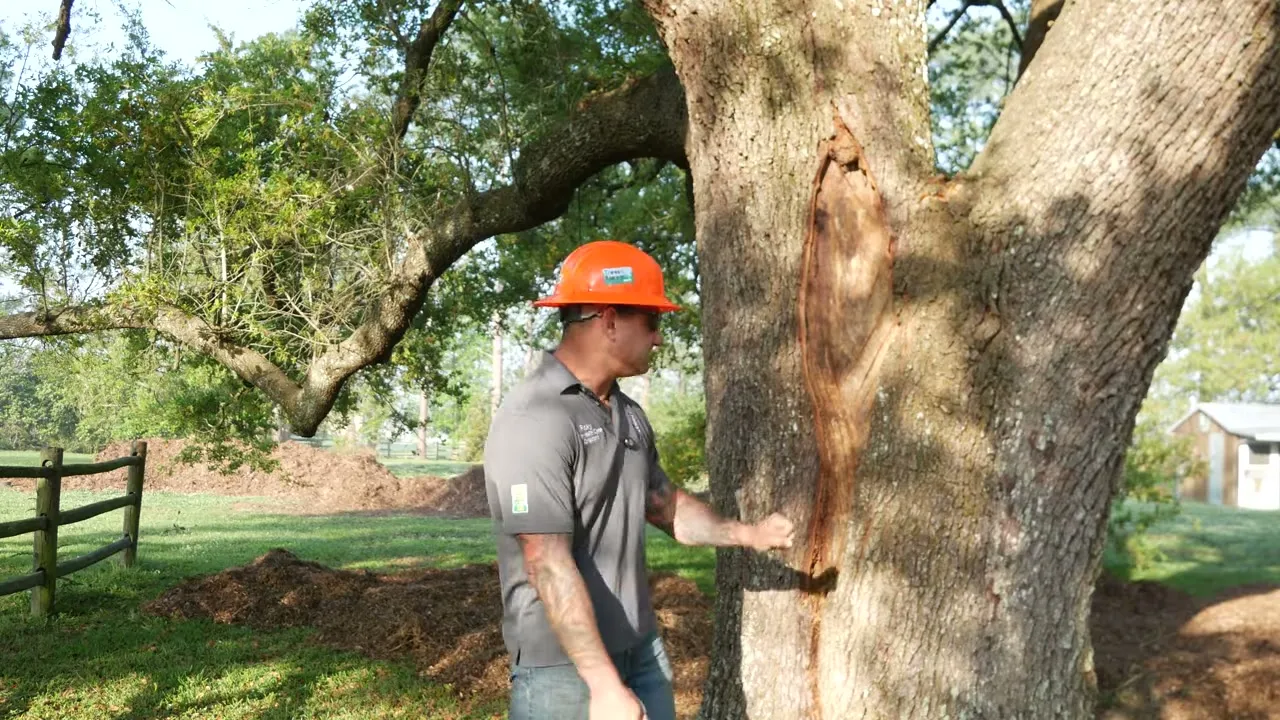
Arborist examining bark damage on a live oak

Tree Healthcare

Tree Healthcare & Plant Health Care

“If a tree is in stress, you don’t treat the tree. You treat the soil,” as consulting arborist Dr. Malcolm Guidry puts it. We diagnose the real cause of decline and treat it at the root zone.

U.S. Army Veteran badge Veterans Veteran Owned / Veteran Led
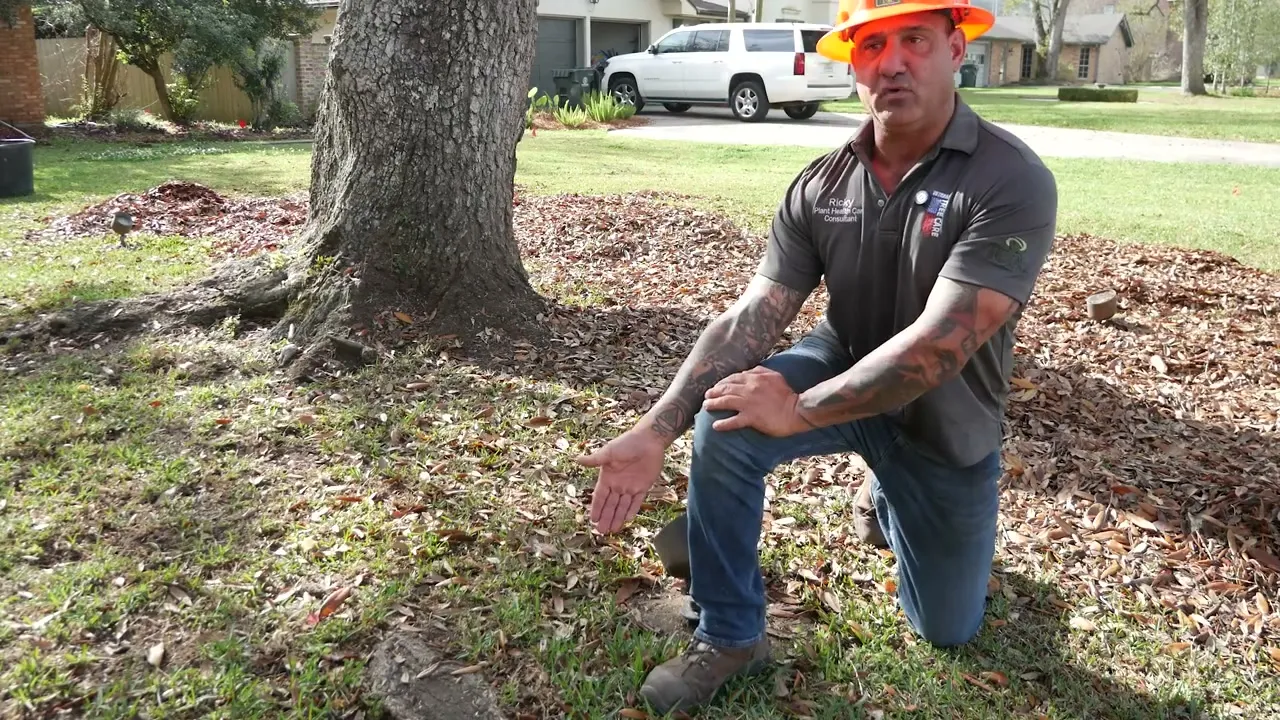
Arborist spreading arborist wood chips in a root zone
Restoring a forest-floor root zone

Our approach

Diagnosis First.

Insects and fungi often move in after a tree is already stressed. Treating them alone rarely solves the problem. We look for the primary cause, such as compaction, root damage, lightning, drought or poor soil, and build a health program around it.

Our approach favors restoring natural soil biology over repeated quick fixes.

What’s included

Plant Health Care Services.

  • Disease & pest diagnosis

    Identifying the primary problem and any secondary pests or pathogens.

  • Environmental-stress management

    Drought, flooding, heat, salt and storm stress.

  • Soil & nutrient management

    Soil testing, organic amendments and nutrient correction.

  • Deep-root fertilization

    Delivering nutrients and biology to the feeder roots where the tree can use them.

  • Soil aeration & decompaction

    Reopening compacted soil so water, air and roots can move.

  • Tree-health inspections & maintenance plans

    Scheduled visits to catch problems early.

How it works

How Tree Healthcare Works.

  1. 01

    Inspect

    We examine the canopy, trunk, root flare and soil, and ask about the site’s history.

  2. 02

    Treat the cause

    Soil and root-zone treatments, targeted pest or disease care, and changes to the site where needed.

  3. 03

    Maintain

    Follow-up applications and inspections track the tree’s recovery.

Know the signs

Signs Your Tree Needs Healthcare.

What you’re seeingWhat it can meanWhere we’d start
Bark splitting away in long stripsPossible lightning damage to the cambium.Diagnosis and a soil program.
Small holes and fine sawdust on the trunkWood-boring insects attacking a stressed tree.Find and treat the primary stress.
Yellowing, sparse or undersized leavesNutrient, root or soil problems.Soil and root-zone evaluation.
Dieback in the upper canopyRoot loss, compaction or disease.Health inspection.

General guidance only. A qualified arborist confirms the cause and the right course of action on site.

Qualified to do it right

The Credentials Behind This Work

ISA Board Certified Master Arborist ISA Certified Arborist ISA Qualifications
How to verify our credentials
  • ISA Board Certified Master Arborist®The highest credential awarded by the International Society of Arboriculture.
  • TCIA Plant Health Care TechnicianTraining in diagnosing and treating tree health and soil problems.
  • ANSI A300 standardsSoil management, root management and support-system standards for tree care.
  • Louisiana Licensed ArboristLicensed by the Louisiana Department of Agriculture & Forestry.

From the field

Case Study.

The problem, the assessment, the reasoning, and the work.

Arborist examining a long strip of dead bark on a lightning-struck live oak
Plant Health Recovery

A lightning-struck live oak

Problem
Bark separating from the trunk in several places, with sawdust-like frass from wood-boring insects.
Assessment
Heat from lightning had killed sections of the cambium. The insects were secondary and arrived because the tree was stressed.
Reasoning
Pesticides can’t reach borers once they’re past the cambium. The answer is to rebuild the tree’s own defenses and let it compartmentalize the damage.
Work performed
Traced dead bark back to live tissue, injected mycorrhizae, humates and biochar with nitrogen held back, and laid 6" of arborist chips.
Result
Wound edges cleaned for closure, with a 30- and 60-day treatment schedule and ongoing monitoring.
Methodology
Plant health care · Compartmentalization of Decay in Trees (CODIT)
Watch the video

As Featured In

FAQ

Questions.

Can’t find your answer? Call 985-688-4041 or see all FAQs.

Do you use harsh chemicals?

We favor rebuilding healthy soil biology with mycorrhizae, humates, biochar and organic matter, and use targeted treatments only when a diagnosis calls for them.

How often should trees be inspected?

At least once a year and after any major storm. Older and high-value trees benefit from a regular care plan.

Do you offer ongoing maintenance plans?

Yes. Tree-health maintenance programs are part of our tree healthcare service.

Get started

Preserving Trees. Protecting Properties. Continuing the Mission.